AI zal je organisatie niet transformeren.
Leiders doen dat, áls ze bereid zijn zichzelf opnieuw uit te vinden.
Dit is waar AI echt vastloopt
De meeste AI-initiatieven mislukken niet door rommelige data of onvolwassen tools. Ze lopen vast omdat AI iets diepers zichtbaar maakt: hoe besluiten worden genomen, wie mandaat heeft en hoe leren werkelijk plaatsvindt.
AI past niet goed in de oude logica van plannen, controleren en voorspellen. Het beweegt sneller dan jaarcycli. Het gedijt bij experimenteren. En het beloont organisaties die snel leren, niet organisaties die wachten op zekerheid.
Daar begint de frictie. In veel organisaties blijft leiderschap sterk gecentraliseerd. Risico wordt beheerst via goedkeuringsrondes. Experimenteren mag, zolang het maar niet te veel verstoort.
AI creëert juist waarde op een andere manier:
- wanneer teams dicht op de data kunnen handelen
- wanneer leren sneller beweegt dan governance
- wanneer leiders bereid zijn onzekerheid te navigeren in plaats van die volledig weg te willen nemen
Het resultaat laat zich raden: proofs of concept stapelen zich op, de impact blijft beperkt en technologie krijgt de schuld. Maar het is helemaal geen toolingprobleem.
Het is een leiderschapsvraagstuk.
Wat AI van leiders zoals jij vraagt
AI vraagt geen technisch meesterschap van iedere leider. Het vraagt om een nieuwe vorm van leiderschap: leiderschap dat context belangrijker maakt dan controle, leren belangrijker dan zekerheid en richting belangrijker dan detail.
AI-native leiders creëren de omstandigheden waarin menselijk oordeel en machine intelligence zich samen kunnen ontwikkelen. Ze hoeven niet de slimste persoon in de ruimte te zijn. Ze zorgen ervoor dat de ruimte is ingericht voor gezamenlijk leren. Dat vraagt om een verschuiving: van commanderen naar verbinden, van plannen naar aanvoelen, van voorspellen naar aanpassen.
En dat begint met afleren. Met het loslaten van reflexen die ooit stabiliteit brachten, maar nu vertraging veroorzaken.
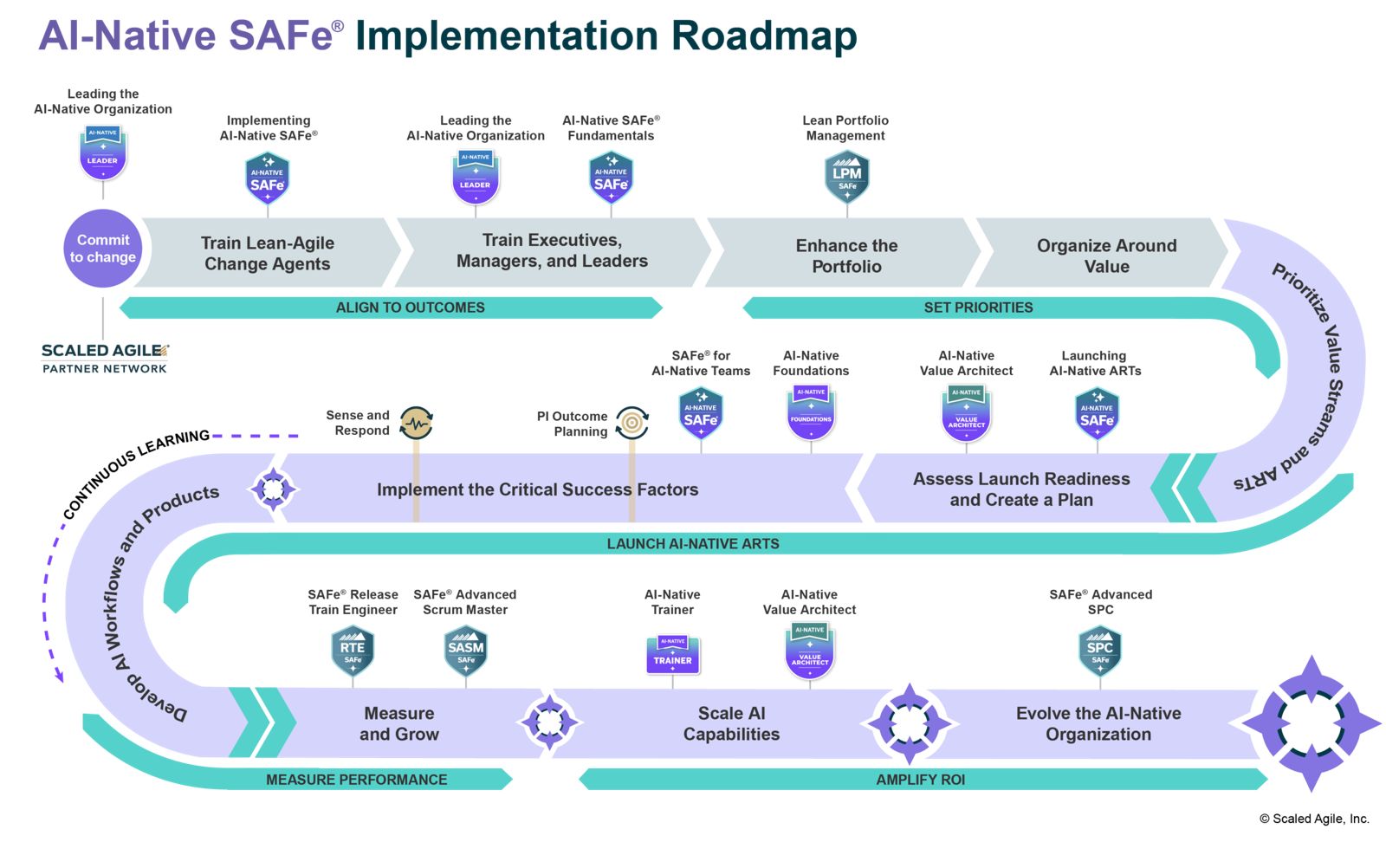
De rol van AI-native change agents
Deze verschuiving ontstaat niet vanzelf. Organisaties belonen vaak nog steeds oud gedrag, ook wanneer leiders AI willen omarmen.
Daar komen AI-native change agents in beeld. Zij bewegen op het snijvlak van leiderschap, leren en delivery. Deze agents zijn geen tool-experts of traditionele change managers. Hun waarde zit in het zichtbaar en hanteerbaar maken van leiderschapsbeperkingen.
Ze helpen organisaties om:
- AI-ambitie te vertalen naar dagelijks besluitvormingsgedrag
- zichtbaar te maken waar governance, incentives of rollen AI-waarde blokkeren
- veilige omgevingen te creëren waarin teams en leiders leren door AI te gebruiken, niet alleen door erover te praten
Het belangrijkste: ze werken mét leiderschap, niet eromheen. Ze dagen aannames respectvol uit, verminderen angst door ervaring en versnellen capability door AI te verweven met echt werk. Hun impact zit in het verkleinen van de afstand tussen strategie en executie. Precies daar waar veel transformaties vastlopen.
De echte transformatie
Organisaties die vooruitgang boeken met AI zijn niet per se technisch verder. Ze zijn organisatorisch eerlijker. Ze zijn bereid te kijken naar hoe leiderschapsgewoontes uitkomsten beïnvloeden. En ze zijn bereid die gewoontes bewust te ontwikkelen. Dus als je organisatie worstelt met AI, begin dan niet meteen met nog een platform, framework of pilot. Begin in plaats daarvan aan de leiderschapstafel.
Wan:
AI zal je organisatie niet transformeren.
Leiderschap doet dat, wanneer het AI-native wordt.
Zet je volgende stap
Boek nu je plek in onze AI Foundations Course:
https://connected-movement.com/course/ai-native-foundations/
Connected Movement is partner sponsor van de komende SAFe & AI Summit. Bekijk onze pagina voor al het nieuws en alle informatie:
https://connected-movement.com/safe-ai-summit-amsterdam-2026/