A conversation with colleague Sebastiaan Zuiddam on learning, ownership and lasting change within organisations.
A question that always comes up
It comes up at almost the same point in every conversation. The consultants are already on board, the plans are on the table, and the transformation agenda is packed. Then comes the question — sometimes cautiously, sometimes quite directly:
“Why would we invest in training on top of everything else?”
Sebastiaan hears this question regularly. As co-founder of Connected Movement, he speaks daily with organisations in the middle of complex transformations. “I completely understand that reaction,” he says. “Especially in environments where the pressure is high and everyone already feels like they’re running to catch up. Training quickly starts to feel like an extra burden — something that takes time and pulls people away from their work.”
Yet according to him, that is precisely the point at which many transformations begin to falter.
The value and the limits of consultants
This is not a reflection on the quality of consultants, Sebastiaan is keen to emphasise. Quite the opposite. He speaks highly of their role. Good consultants bring clarity, pace and direction. They help organisations make decisions they have been avoiding for too long. They spot patterns that have become invisible from the inside and have the confidence to name them.
“Particularly in large transformations, consultants are often indispensable,” he says. “They help get things moving.”
But consultants are also temporary. However engaged and skilled they are, they eventually leave. And that, according to Sebastiaan, is where a significant tension emerges. “Ownership of what has been designed always rests with the people who stay. And that is precisely where you often see a gap appearing.”
When change stays external
That gap rarely becomes visible straight away. In the early stages, everything seems to be working. The structure is in place, the roles are defined, the agreements are made. But as soon as the day-to-day pressures take over again, old patterns slowly start to creep back.
Teams work more or less according to the new model. Roles are interpreted differently. Decisions are still made outside the agreed boundaries — often under time pressure and with the best intentions.
“What you then see,” says Sebastiaan, “is that change remains something external. Something that was designed and explained, but never really became the people’s own.”
Knowing is not the same as being able to do it
According to Sebastiaan, this has little to do with resistance. Far more often, it comes down to the difference between understanding and applying. People usually know perfectly well what is intended. They know the theory, the principles, the new agreements — but knowing is not the same as being able to do something. And certainly not the same as being willing to try.
“In difficult situations, we all fall back on what feels familiar,” he explains. “Even when we know better. That’s human nature. And that is precisely where change often gets stuck — not in the intention, but in the behaviour when things get uncomfortable.”
What training actually does
And that is precisely where training comes in. Not as an optional extra, but as an essential part of change.
Sebastiaan is clear that good training has little to do with knowledge transfer alone. “Training is about making sense of things. About exploring together what a change actually asks of people in their day-to-day work. About conversations that rarely happen in the flow of operations. About surfacing doubts, assumptions and expectations.”
Where consultants help design the system, training helps people make that system their own. To experience where it feels uncomfortable. To practise new behaviours — especially in situations where the pressure is on.
Solving problems versus building capability
He often sums up that distinction in a single sentence: consultants solve problems, training builds capability.
“Solving problems is important,” says Sebastiaan. “When something is stuck, you need direction. But without training, an organisation remains dependent on external input. Training builds craft, confidence and a shared frame of reference. That’s what creates the ability to navigate change on your own.”
The difference, then, lies not in the intention but in the time horizon.
The hidden costs of skipping training
According to Sebastiaan, the costs of not investing in training are difficult to measure but always felt. They do not show up in invoices or budgets, but in meetings that run longer than they should. In decisions that keep being re-litigated. In friction between roles and teams that do not quite understand each other. In loss of energy, cynicism — and a word coined for exactly this:
transformation fatigue
“What’s usually missing,” he says, “is not good intentions, but a shared foundation. A common way of looking at things and working together.”
Training builds that foundation — precisely by taking time when there never seems to be any.
How training and consulting strengthen each other
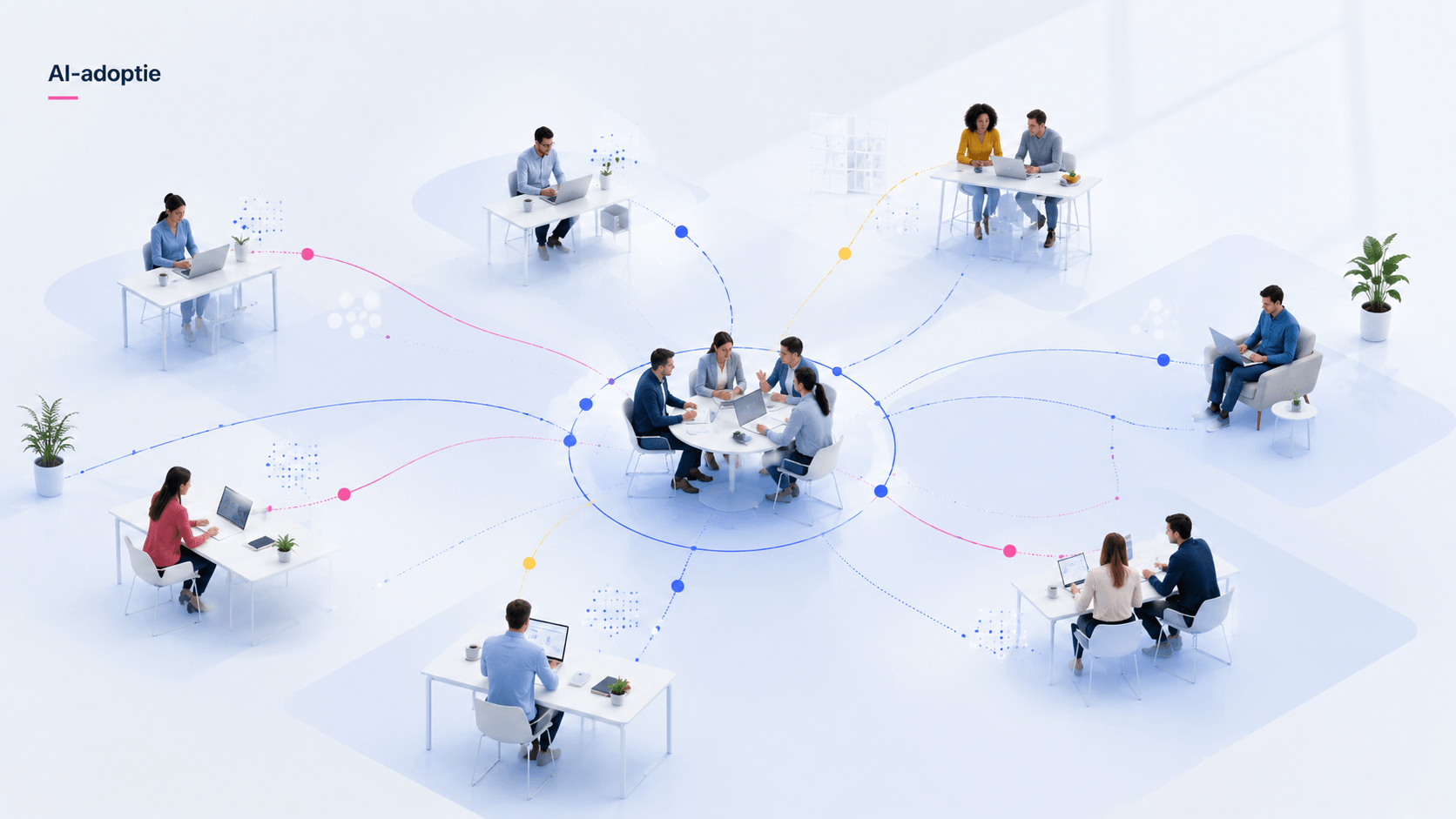
Organisations that combine training and consulting effectively take a fundamentally different approach, according to Sebastiaan. Training is not a budget line item they squeeze in at the end, but a deliberate part of how they approach change. Not something that comes alongside, but something that runs all the way through.
Upfront, to create a shared starting point. During, to make sense of experiences and course-correct. And afterwards, to embed and deepen what has been learnt.
Equally important is that consultants and trainers work from the same narrative. “For people in the organisation, that feels reassuring,” says Sebastiaan. “They hear one consistent message, not different ones coming from different directions.”
Where it really matters: roles and behaviour
According to Sebastiaan, training often makes the biggest difference at the level of roles and behaviour. A lot of consulting work rightly focuses on structures and processes, but in practice most problems come down to questions like: who makes which decision, when do I check in with others, where does my responsibility end and someone else’s begin?
“Those aren’t theoretical questions,” he says. “Those are everyday dilemmas. And training creates the space to bring them out into the open and work through them together.”
That, he says, is where Role Clarity develops — and with it, calm and effectiveness. Read our blog on Role Clarity: From noise to rhythm: how Role Clarity gets teams moving
When training does not work
Sebastiaan is equally realistic about this. Training is not a silver bullet. If there is no clear direction, if decisions keep getting reversed, or if leadership remains absent, training will deliver little. In those situations, it often makes more sense to use consulting first to bring some order and make the key decisions.
“But as soon as that clarity is there,” he says, “training becomes essential to make that direction actually land.”
Change as a shared responsibility
Ultimately, the question of why you still need training when consultants are already involved touches on something deeper, according to Sebastiaan. How do you think about change? As something you can outsource? Or as something people need to learn to carry together?
Consultants can provide direction, accelerate progress and act as a mirror. Training helps people understand that direction, apply it and sustain it. Organisations that combine both effectively invest not only in solutions, but in their own capacity to handle change.
And that is precisely where lasting development comes from. Not because there is always someone from outside keeping watch, but because the organisation grows stronger from within.
Would you like to discuss this topic? If you’re struggling with this challenge in your organisation, get in touch and we’ll explore the best approach together.