Why Portfolio Management Gets Stuck in Outdated Budgeting Logic
A summary of the webinar: Strategic portfolio management: what organisations can learn from Silicon Valley’s VCs, 17 June 2026. Why


Leestijd
People attend training based on a learning need. Often, this need arises from interest or because there is a skill gap in their activities. To achieve the highest possible learning impact, a training provider wants participants to actually do something with the training.
Most trainers I know pay a lot of attention to connecting theory with daily practice. Practical examples, exercises, and case studies ensure that participants recognize themselves in the situations being discussed.
A strong starting point and exactly what we try to do as well. Differentiating based on level, but certainly also on daily activities. This allows participants to link the theory to their daily practice.
Follow-up days are also a frequently used learning intervention. Often, experiences are exchanged, theory is refreshed, or participants are prepared for an exam. Valuable, certainly. But even then, the question remains how we support participants at the moment they actually have to apply what they have learned in their daily practice.
Because no matter how relevant the theory is, the real challenge often only begins when participants return to their work. Where they have to make choices, involve stakeholders, and deal with resistance, limited capacity, and the complexity of their own organization.
Compare it to driving lessons. During driving lessons, you learn how to drive a car. You learn to shift gears, check your mirrors, merge, and park. But most people will recognize that they only truly learned to drive after they got their license. A Product Owner can learn how stakeholder management works during a training session. A Scrum Master can understand how to coach teams. A manager can gain new insights into leadership. But the real challenge arises when that same professional returns to the office and discovers that practice is more stubborn than theory. And at exactly that moment, the trainer’s influence largely ends.
But it does raise an interesting question. If we know that the majority of learning takes place after the training, why do we primarily invest in the training itself?

Many Learning & Development and HR professionals are familiar with the 70-20-10 model for professional development. Approximately 10% of development occurs through formal training and education, 20% arises through interaction with others, and 70% occurs in practice.
Yet most training programs focus primarily on that first 10%. This is logical, as it is the part that can be planned and over which we have full influence. But the reality is that participants only truly start learning when they are back in their daily practice. Those are the moments when development occurs. Precisely because someone has to discover how the theory learned in the training works within their own context. A training session provides direction. Practice provides experience, but there is something else in between those two.
In my opinion, that 20% of peer learning is often underestimated. Learning from others, also known as peer learning. From professionals who are dealing with similar issues and encountered the same problem only yesterday. Peers who have had to make similar choices. Who can tell you what worked, what didn’t work, and why.
In many organizations, this layer is missing. The training is completed, everyone goes back to work, and then everyone individually tries to figure out how the theory relates to practice. While that is precisely where enormous value lies. In fact, I believe that is exactly where the difference is made between a participant who has attended a training and a participant who actually changes their way of working.
The Business Professional Community was born from that thought. Because we saw that the majority of development takes place after the training is over.
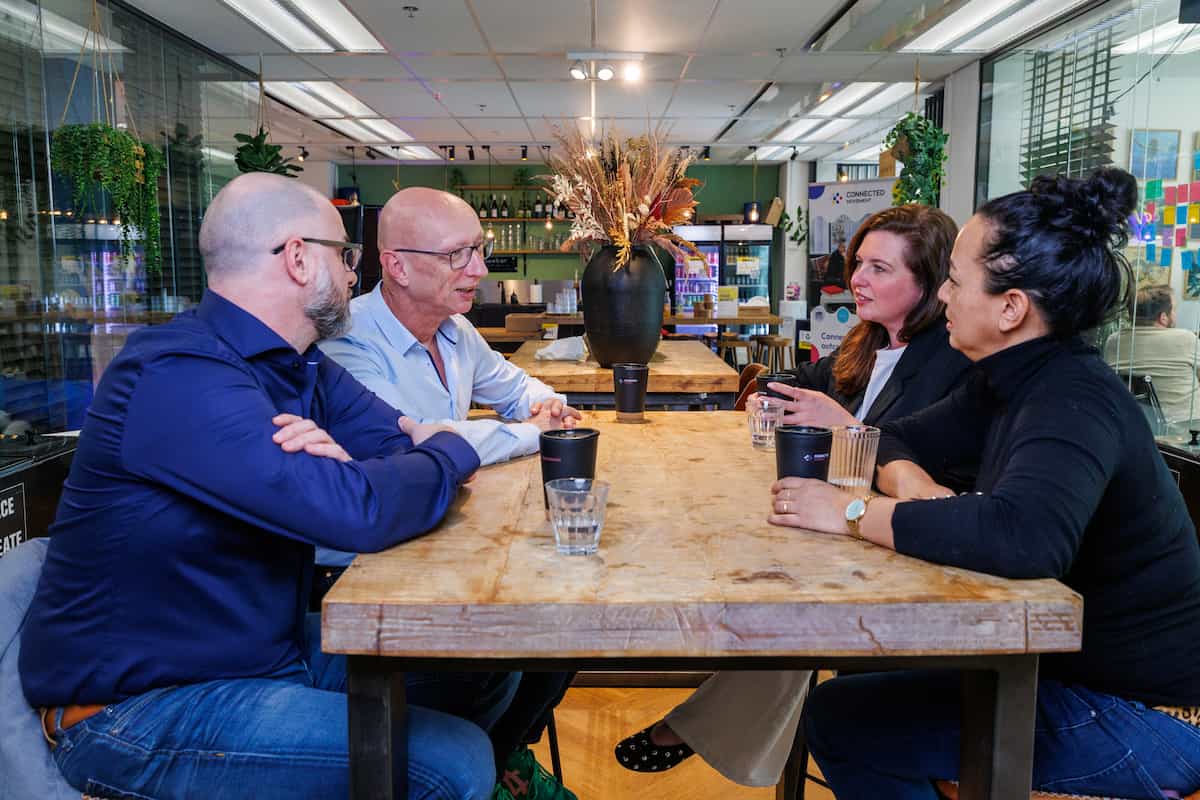
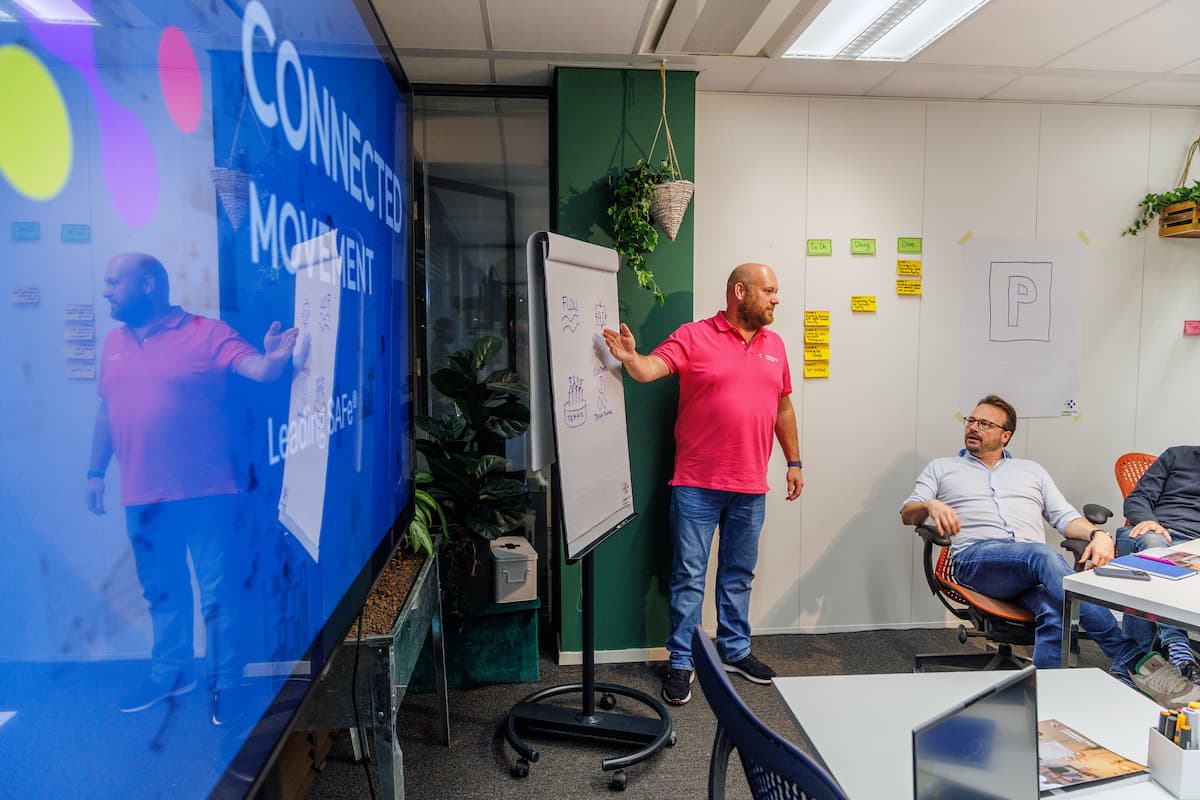
Through our Community, participants remain part of a learning environment. During our Round Tables, which take place every six weeks, participants bring in their own cases. Real situations they are struggling with at that moment. Decisions that need to be made or issues where multiple solutions are possible. Together with other professionals, we investigate which options are available, what experiences others have gained, and which insights from training courses can help. In this way, we consciously try to organize that 20% of the learning process. The Round Tables are the place where theory and practice meet.
For participants, this means that learning does not stop once the training has ended. For L&D professionals, it means that a training course no longer has to be a standalone intervention. Through the six-week cycle, the knowledge from a training session stays alive longer. Practical issues are given a place and participants are supported at the moment they actually have to apply what they have learned. As a result, we address all parts of the 70-20-10 model as optimally as possible.
A training course is not an end point. It is the beginning of a learning process. With our Community, we try to help participants even after the training to actually apply the theory in their daily practice. Because ultimately, learning impact is not about what someone learns during a training session, but about what someone actually does differently months later.
Artikel delen


A summary of the webinar: Strategic portfolio management: what organisations can learn from Silicon Valley’s VCs, 17 June 2026. Why


You see the price of a SAFe training and think: “Seriously? Two days of training?” That’s a perfectly understandable reaction


We’re at the SAFe & AI Summit Amsterdam 2026 Introduction In this episode of Connected Conversations, Judith van Hoof and


Change does not have to be difficult or complex. With the right focus, energy and guidance, you create clarity, direction and results.
We would be happy to explore how we can help.